Music has always been part of my daily life. Since I have studied music before, I often notice rhythm, energy, mood, and how different musical elements work together. I also listen to music constantly in the background while studying or working. This made me curious about what makes a song popular, catchy, and memorable.
For this project, I used a Spotify dataset to explore whether hit songs share common characteristics. Spotify gives each song a popularity score from 0 to 100. I defined a “hit” as any song with a popularity score of 75 or higher.
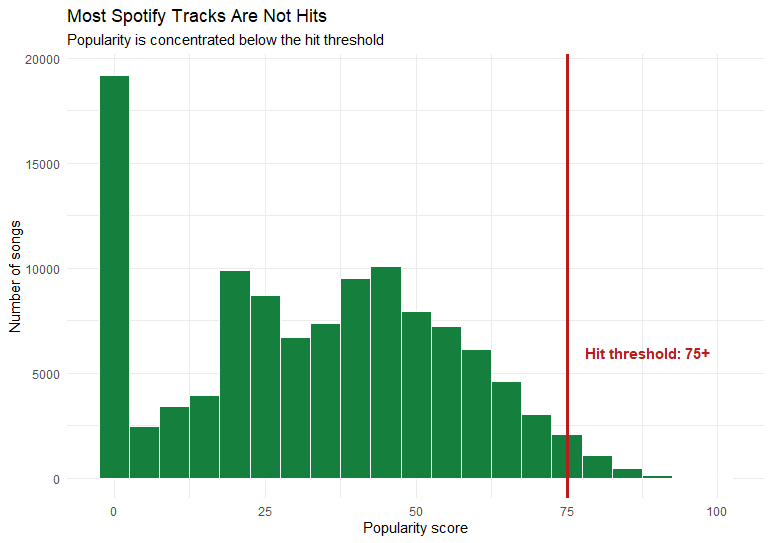
The first visualization shows that hits are rare. Most songs are concentrated below a popularity score of 60, while only a small number reach 75 or more. This means that becoming a hit is not common, so it is worth investigating what separates these songs from the rest.
The Audio Fingerprint of Hits
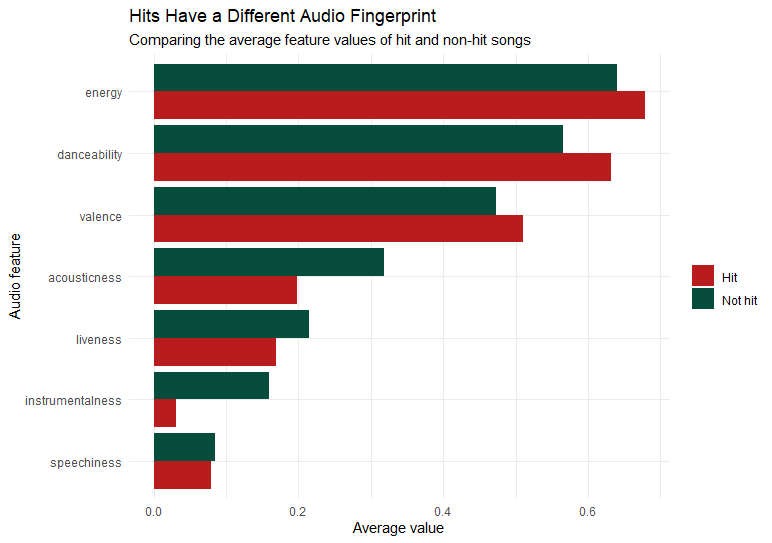
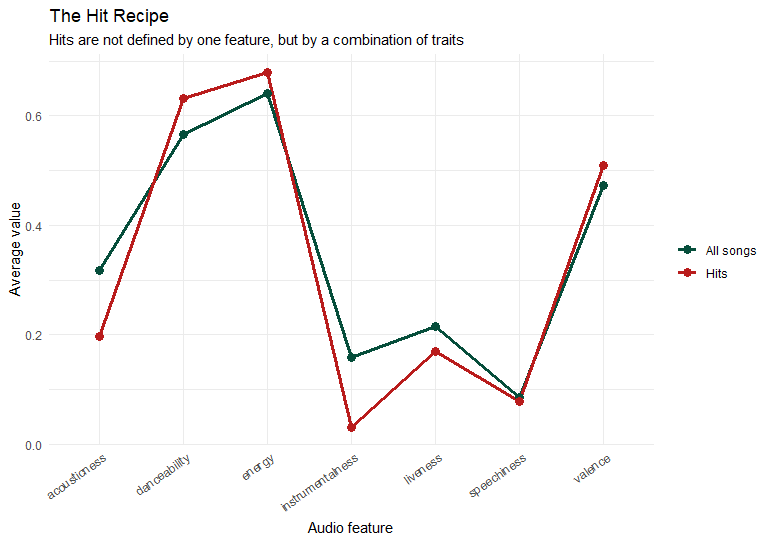
This visualization compares the average audio features of hits and non-hits. Hits tend to be more danceable, more energetic, and slightly more positive. They also tend to be less instrumental, which suggests that songs with stronger vocals and clearer rhythmic structure may appeal more to listeners.
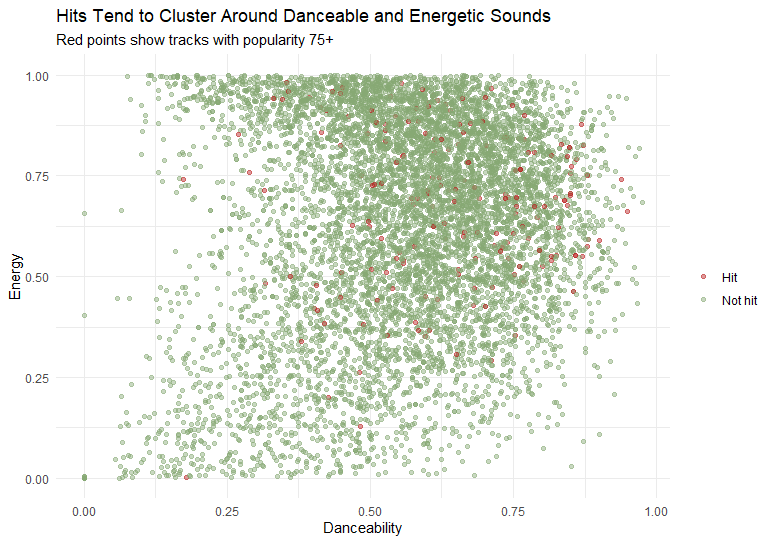
However, one feature alone is not enough to explain popularity. The scatterplot of danceability and energy shows that hits tend to appear in a specific area where both features are relatively high. This suggests that a hit is created by a combination of characteristics rather than one single factor.
Does Mood Matter?
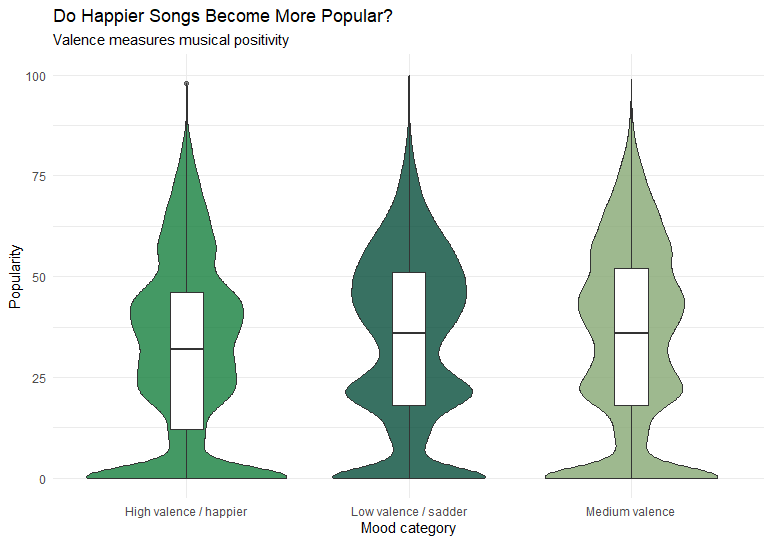
I examined mood using the valence feature, which measures how positive or happy a song sounds. The visualization shows large overlap between low, medium, and high valence songs. This means that mood alone does not strongly predict popularity. Both happier and sadder songs can become popular.
Genre Matters
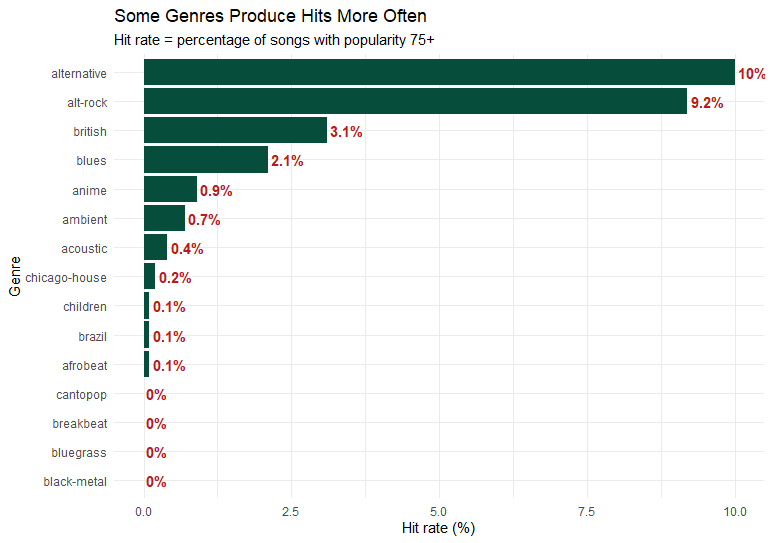
Genre also plays an important role in explaining popularity. The first genre visualization focuses on the hit rate, which represents the percentage of songs in each genre that reached a popularity score of 75 or higher. From this graph, genres such as alternative and alt-rock appear to produce hits more frequently than the others in the dataset. This suggests that some genres may have a stronger tendency to create songs that resonate widely with listeners.
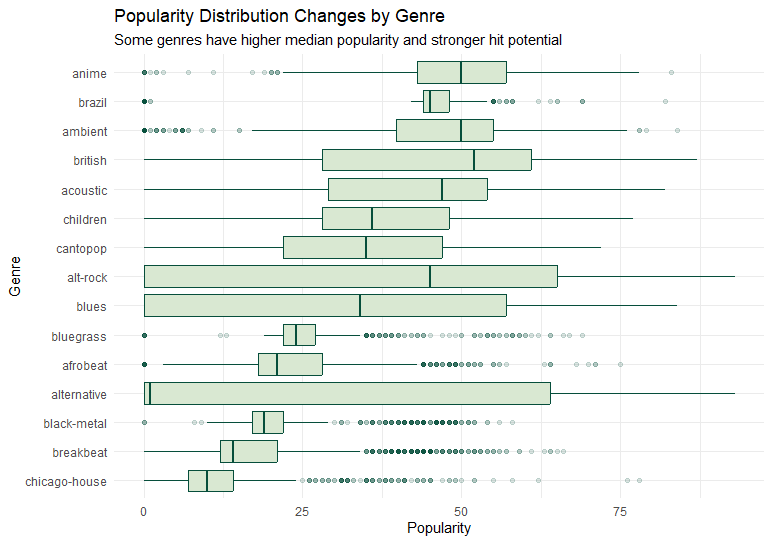
However, the second visualization provides a more detailed perspective by showing the full popularity distribution of each genre using boxplots. This graph reveals that a genre having a high hit rate does not necessarily mean that all songs within it are consistently popular. For example, alternative music shows large variation in popularity, containing both highly successful songs and many lower-performing ones. This demonstrates that genre influences popularity, but success within a genre can still vary significantly from one song to another.
Conclusion
Overall, this project shows that music popularity is not explained by one simple factor. A hit song is usually built from a combination of features: rhythm, energy, mood, vocals, and genre context all work together. While music taste remains personal and emotional, data visualization helps uncover patterns that are not always obvious when we only listen casually. This made the project meaningful to me because it connected my personal interest in music with a data-driven exploration of what makes songs catchy, memorable, and widely appealing.
Dataset Link: Spotify Tracks Dataset
